Melting Point of Steel: Temperature Range, Types, and Facts
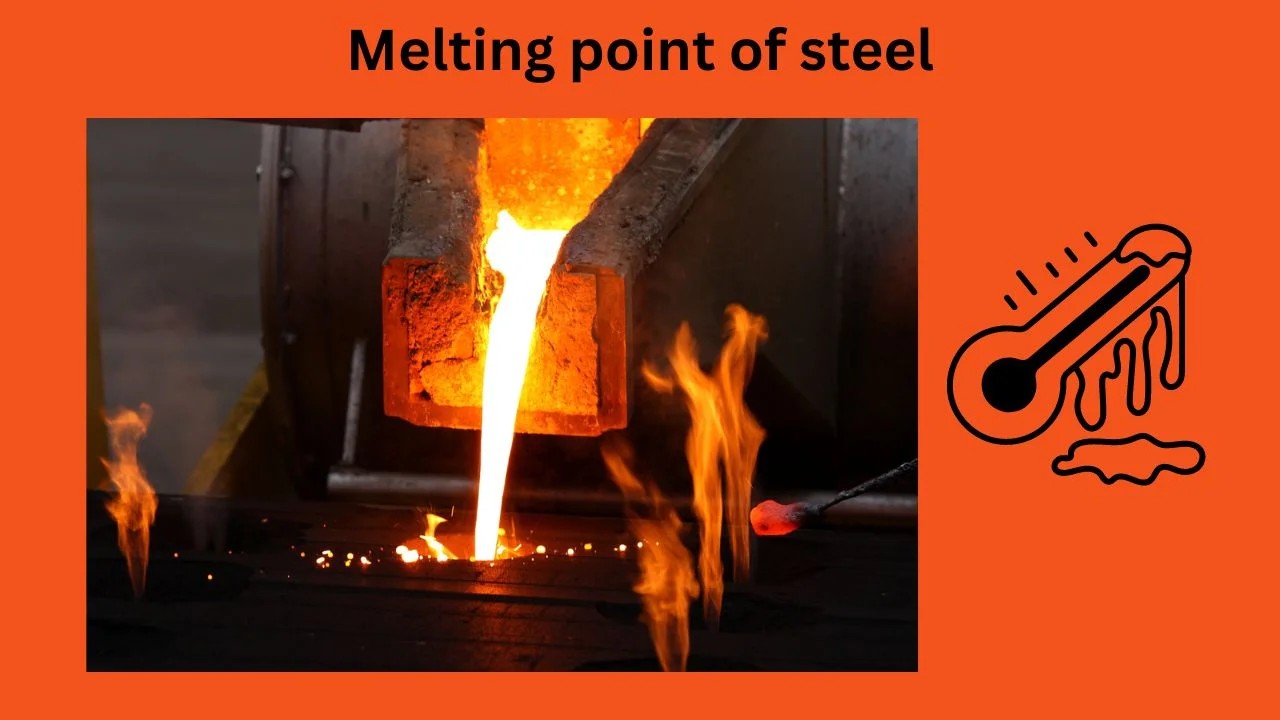
Steel is one of the most widely used metals in the world. It appears in the middle of everyday life, in buildings as well as in tools. The most common question that people ask is the melting point of steel. The solution is not as simple. Steel undergoes the process of blending iron with other components, hence altering its behavior during heat exposure. Here you will be introduced to the range of temperatures, comparison of the various types, and the reason these values are relevant in actual work.
What Is the Melting Point of Steel?
The melting point of the steel is 2,500-2,800 F. This approximately ranges between 1,370 C and 1,540 C. It is very hot and way above the capacity of most unsophisticated systems. Steel can not be melted at one fixed temperature, as pure metals are. Rather, it melts and then becomes completely molten along with the rise in heat. This is a significant range since it influences the management of steel in the workshop and factories.
Why Steel Has a Temperature Range
Steel is not a pure substance. It is an iron alloy containing low traces of carbon and other metals. The addition of these elements alters the tightness of the packing of the atoms. This implies that the metal is not melted immediately. There are those who start getting soft earlier and those who take longer to lose their shape. This is why engineers never refer to a point but to a range.
Melting Points of Common Steel Types
The melting points of various types of steel vary slightly. Mild steel, in common use in the building industry, tends to melt more towards the higher side of the range. The additional carbon makes high-carbon steel melt at a rather lower temperature. It is also because of the presence of chromium and nickel that the melting point is slightly lower in stainless steel. These changes may seem to be little, but there is a noticeable difference that they cause in the welding and forming process.
Carbon and Its Effect
Carbon is a significant part of steel. The addition of more carbon interferes with the structure of iron. This facilitates softening of the metal in heat. Consequently, high carbon steel melts at a lower temperature compared to low carbon steel. This effect has been likened to melting ice by adding a small amount of salt; in that case, a little added salt alters the behavior of the entire substance.
Steel Compared to Other Metals
The steel is highly effective in absorbing heat, relative to other metals. Aluminum melting point is 1220 F. Copper melting point is around 1984 F. Steel is very high compared to copper and aluminum. This is what causes the repetition of the use of steel in the buildings, which are meant to be able to withstand the warm temperatures. Nevertheless, it does not melt instantly before losing strength, and it is good to know this fact in order to be safe.
Melting vs Strength Loss
One common mistake is thinking steel stays strong until it melts. As a matter of fact, it starts to wear at a much earlier time. At temperatures of approximately 1,000 F, steel may lose much of its strength. It can still be hard, but it will bend or break when it is loaded. That is why fireproofing materials are adopted in buildings in order to ensure that steel is cooled during a fire.
Can You Melt Steel at Home?
Home smelting of steel is extremely challenging. The majority of small furnaces are not able to attain the necessary temperature. They can fire up the steel till it becomes soft and glows. Electric arc furnaces are industrial facilities that are required to melt steel. In the case of beginners, it is far more convenient to work with solid but heated steel.
Real World Use and Fabrication
In real workshops, understanding these temperatures helps avoid damage. Companies such as ShincoFab deal with steel daily and have to manage the heat. Wintering or weak joints can be obtained even by slight mistakes. When one learns how steel acts in heat, it will lead to better performance and measures in cutting and welding.
Conclusion
There is no single melting point of steel. The ability to vary depends on composition, heat conditions, and how it is applied in practice. Between 2,500 F and 2,800 F, the transition of steel into liquid is not linear but occurs in stages, as opposed to a change. This is significant in welding, forming, and also in high-heat applications.